For four years our photography website ran on WordPress. It worked. It also slowly stopped feeling like ours.
This is part 1 of the Dangtastic Shots story: why we left WordPress, what we moved to, and how a hosting change I expected to take weeks was done in a single evening.
The old site
Our old site was built with WordPress and Elementor. WordPress is the system behind a huge part of the web: you log in, write your pages, and it builds the website for you every time someone visits. Elementor is a page builder on top of it, so you can design pages by dragging blocks around instead of writing code. Add a few plugins (small add-ons for things like forms or galleries) and you have a full website without writing a line of code.
That convenience comes at a price, and for us the bill came in three parts.
Three reasons to leave
Speed. Speed and optimization were the main reasons to move. A photography site lives on big, beautiful images, and every extra second of loading is a visitor who might not wait. Google’s Lighthouse tool gave the old site a performance score of about 65 out of 100.
A mixed message. We were renewing our business, and that took a while. For the last year to year and a half, parts of our old name and branding were still live next to the new ones. The site was mixing two styles and two tones of voice, which is not great when the whole point is to look like one business.
Not really mine. Some plugins we relied on suddenly needed to be paid for, or changed the way they worked completely. I had no real say in that. Parts of my own website were controlled by other people’s update schedules, and that started to bother me. As a developer, it felt like living in a rented house where the landlord rearranges the furniture every few months.
Why Astro
So I moved the site to Astro. Astro is a static site generator: instead of building each page the moment a visitor asks for it, it builds every page once, ahead of time, into plain HTML and CSS. Think of a restaurant that prints its menu once, instead of handwriting a new one for every guest. The guest gets the same menu, just a lot faster.
That gave me what I was missing:
- Speed by default. No database to ask, no page builder to load, just files.
- Full control. No plugins that change under my feet. If something changes, it is because I changed it.
- One style everywhere. Every page, form and email follows the same design system, because I built them all.
The catch: no plugins also means nothing comes for free. Bookings, forms, confirmation emails, all of it had to be built by hand. That turned out to be the biggest part of the project, and it gets its own post in part 3.
The move, in one evening
Some things went surprisingly smoothly. Our portfolio had just been renewed and the texts on our pages had recently been reviewed, so the content only needed a new home in Astro.
What I expected to be the hard part was our hosting. We had a WordPress package at our hosting company, and needed to move to a basic hosting package for a static site. I pictured weeks of back and forth.
It was done in one evening.
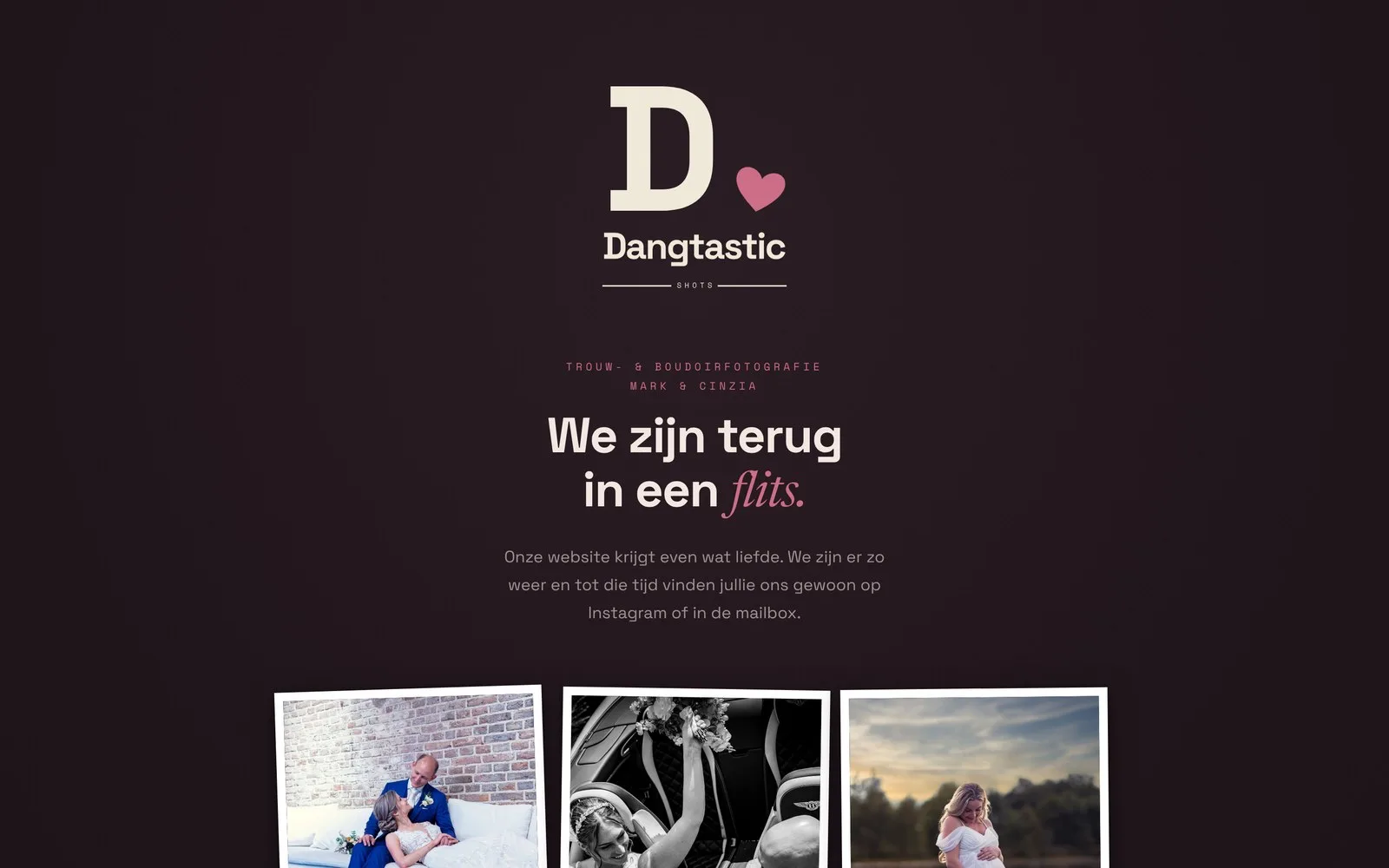
To be fair to our hosting company: that was entirely my doing. They were very helpful, made backups, took care of moving our mailbox, and only continued when I gave the go-ahead. I just gave the go-ahead very enthusiastically. The result was that the old site was gone that same evening, and the new one was not finished yet. So I improvised a “Back in a flash…” page to keep visitors company while I worked on the real thing.
The result
Once the new site was live, I ran Lighthouse again:
| WordPress | Astro | |
|---|---|---|
| Performance | about 65 | 99 |
| Accessibility | 45 | 100 |
| Best practices | 30 | 100 |
Accessibility measures how well the site works for everyone, including people who use a screen reader or cannot use a mouse. Best practices checks things like security and modern web standards. Both went from 45 and 30 to a full 100.
Lessons
- Convenience has a price. Plugins save time until they start making decisions for you.
- Fresh content makes a move easy. Because our portfolio and texts were already renewed, the move was about building, not rewriting.
- Have a holding page ready. Things can go faster than you plan. A friendly “Back in a flash…” page beats an empty screen.
What’s next
In part 2 I will tell how Mark Dang Photography became Dangtastic Shots, and why our heart is tilted. Part 3 is all about building our own booking system without a single plugin.